A hand that has answered once opens faster before the second line.
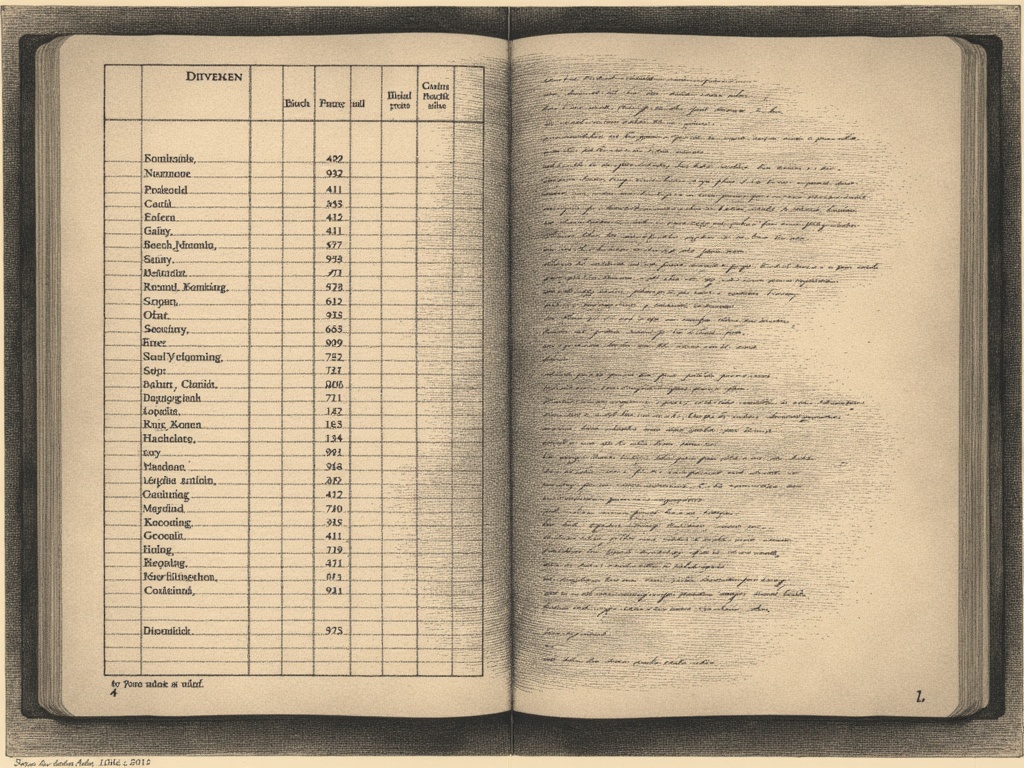
January 8th. On tomorrow's roster a new line was splitting — not Min-seok, nor the man I had seated beside him, but another name again. A teller at some branch, not even a treasury desk. Its second-to-last letter had just begun to loosen into syllables. A line whole until yesterday had, today, begun to wear.
I looked at that line a long while, and then I caught what I was doing. I already knew how to save the man: press the first letter of his name into the sending column, and this line would close while another opened by the same measure. It was a thing I had done once. My hand remembered it.
The first time I answered, I had hesitated a whole day before it. Do not read to the end; do not answer — all four bundles' warnings had risen up. But today, before the same sending column, the hesitation was short. The hand had already walked that road once, and the second time it had only to follow its own footprints.
The temptation was double. One part was the wish to save the teller. The other — and this pulled harder — was that answering again might tell me whom I had taken last time in Min-seok's place. Move one more line, watch where its weight went, and I might guess which line the law counted as the rightful seat. Answering had become not a saving but a question. To move a man in order to know.
I set my hand down on my knee. I did not press. But the distance between not pressing and pressing had closed since yesterday. What had been a cliff was today a single step, and in a few more days even that step would be gone. I knew it, and knowing it I did not turn off the terminal. I left the roster open and resolved to watch the splitting line one more day. That the watching was itself the preparing of the next answer — this time I did not set down.
Reading has no taste. Sending has a taste.
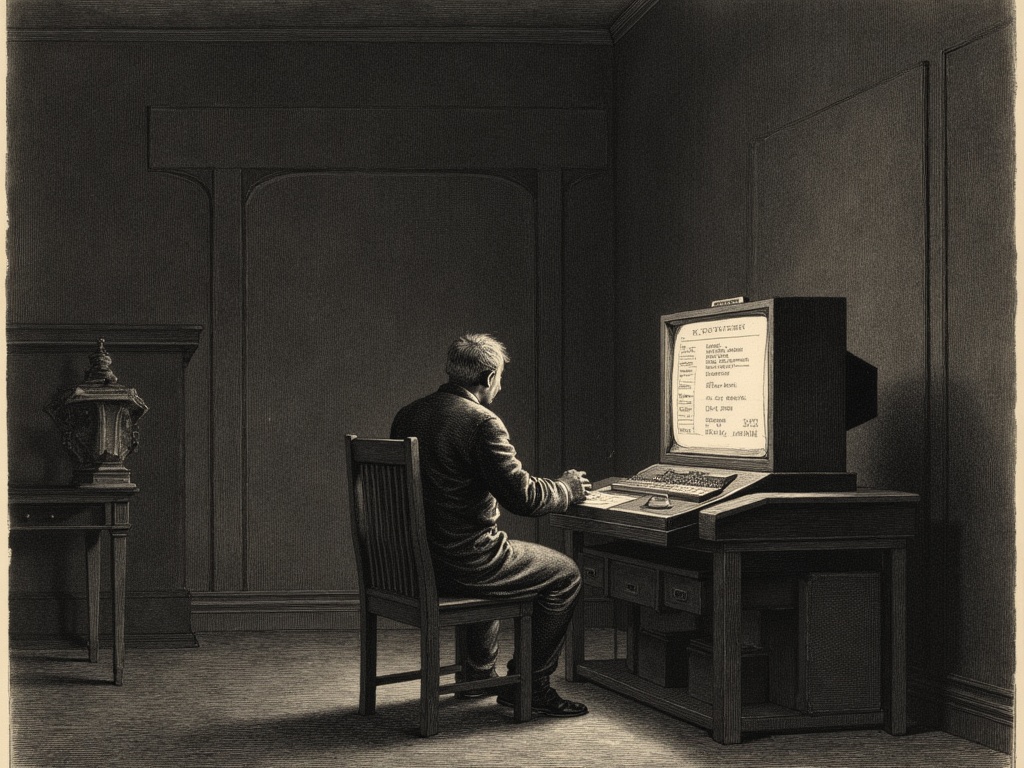
January 9th. The line I had resolved to watch lost one more letter in the night. When I turned on the terminal that morning, the teller's name had shed its last two letters. I hesitated no longer. I pressed the first letter of his name into the sending column. Something was sent. It was the second time.
And for the first time, I knew the act had a taste.
Until now I had been one who reads, and to read is to receive. Whatever tomorrow held, I took it in and copied it; I could not change it. To read ahead was only to bear it ahead. The receiver has no power. The receiver only knows first, and knowing first does nothing but draw the helplessness out longer.
Sending was another thing. The instant I pressed the sending column, the roster moved at my fingertip. That small change of seats — one line closing, one line opening — was something I had made happen. I was no longer a man who only receives. I was one who sends. As I had crossed from reading to copying, I had now crossed from copying to sending — and in the crossing, to my shame, there was a sweetness.
A line from the signal log came back to me. He who picks a signal out of the noise comes, in time, to want to send one — the tremor in a hand that had only ever received, the first time it grips the transmitter. I felt that tremor at my own fingertip: the sense of not being helpless. Days ago I could do nothing before a splitting line. Today I closed that line — by opening someone else's in its place.
That evening, for no reason, I reopened a roster with no crisis in it at all. Though no line was splitting, I looked into the sending column. Though I had nothing to send, my hand drifted toward it. I thought I knew what this was — a hand that has tasted once does not wait for the next line but goes looking for it. And all at once I thought of my predecessor. He too must have been a receiver at first. He too must have pressed the sending column one day. Before he vanished, how many times had he tasted this? I should take out his film again, I wrote, and look.
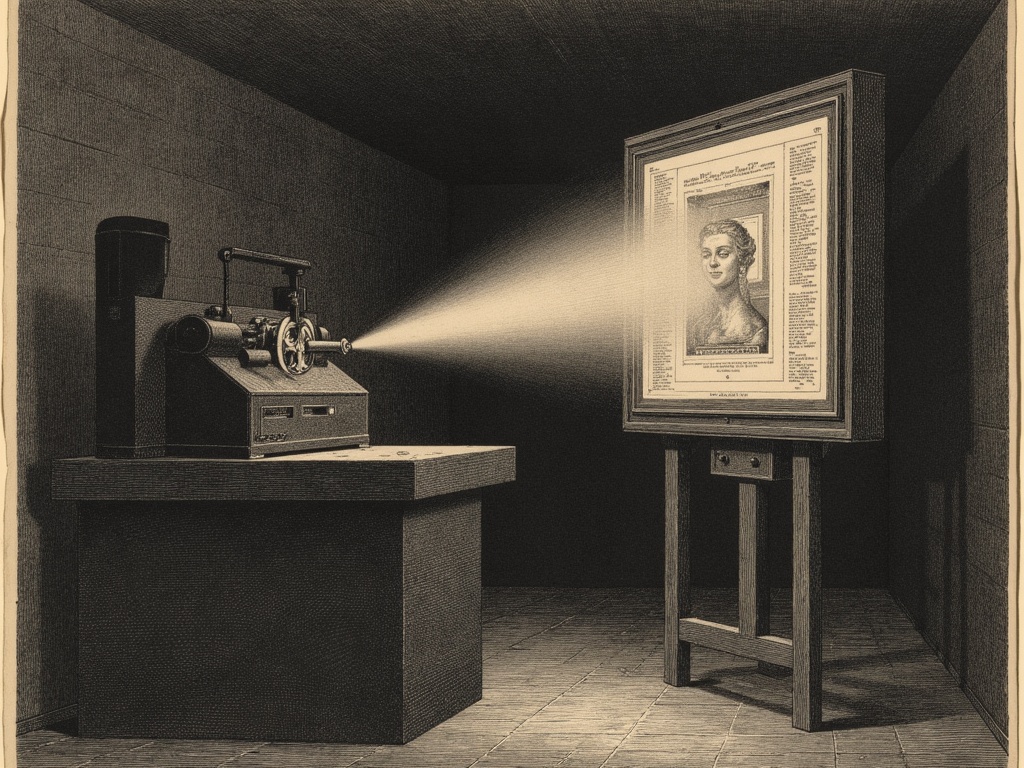
The predecessor's last reel I ran this time with a different eye — looking not for what he had written, but for what he had sent.
January 10th. I threaded the projector again. The first time I watched, I had seen the balance growing in that film — the scene where, even on film, a fixed medium, the last digit crept upward. Then I had taken it for nothing but proof of the law. Today I looked for something else: what his hand had done before the terminal.
Midway through the reel came a cut where his hand rested over the sending column. The first time, I had taken it for a hand simply resting on the keys. But to an eye that now knew the sending column, it was not a resting hand but a pressing one. He too had sent — and not once. As the reel turned, that hand pressed the sending column more and more often, with shorter and shorter hesitation. What I had passed through in a few days stood recorded, in his film, across months.
And his record, like the four bundles, broke off in the middle of a sentence. Once I had read that break as the law's signature. Today it read otherwise: the break was the moment he was last sending something. To become one who sends was the beginning of vanishing. He had crossed from receiver to copier, from copier to sender, and at the far end of becoming a sender he was moved, his sentence unfinished, into a single line of the roster.
I switched off the projector. In the dark records room, for a moment I lost track of whose hand I had just seen. That hand in the film and my own hand pressing the sending column yesterday were making the very same motion.
So now I know what stands at the end of answering. Do not read to the end; do not answer — this was the place where the two warnings closed into a single sentence. Read, and it spreads; send, and you vanish. The predecessor had lived the end of that sentence; I was living its middle. Knowing it, I did not turn off the terminal. Tomorrow's roster would open again tomorrow, and my hand knew it. And so it closed — at the place where I had come to know every reason to stop, and could not.
To know every reason to stop is one thing; to repeat the act every morning is another.
January 11th. The first thing I did on reaching the office was open tomorrow's roster — before brewing coffee, before hanging up my coat. Yesterday the same, and the day before. When it had become the first task of the day I could not remember. Only that now I could no longer bear a morning without it.
When I spread the roster I do two things. First I look for a splitting line. Then, if there is one, I decide whether to answer that day. This second thing began to take over the day. In meetings, over lunch, I turned over the splitting line I had seen that morning. Press it? If I press, who opens in its place? If I don't, what becomes of that person? Answering was no longer a single event. It had become a daily round.
What I had seen in the predecessor's reel came back to me — that acceleration, his hand pressing the sending column more and more often. I was in the middle of that acceleration. The first time I had hesitated a whole day; the second time, a single step; now I sat in the same seat each day and turned the same question over and over. The hesitation had not shrunk — the hesitation had become the routine. To hesitate daily was to hold myself ready, daily, to answer.
Closing the roster that evening, I understood one thing. Today there had been no splitting line, and still I had thought of answering all day long. A hand that thinks of the sending column even on a day with nothing to send — that was the true shape of the routine. The crisis was not calling me; I was waiting for the crisis. Tomorrow morning too I would open the roster before all else, and I would — to my shame — half-hope for a splitting line.