The day after I answered, I came to receive the reply.
January 5th. Yesterday I pressed the K of Kang Min-seok's name into the sending column. Something was sent, and there, nothing happened. The answer would be received by the next person — so I had written. But the next person had not yet come, and so the answer came to me first.
I turned on the terminal and opened tomorrow's roster. First I looked to where Min-seok's firm had stood. The name was whole again — Kang, Min, Seok held fast, one against the next. The name that had been splitting into syllables until yesterday had come back, today, as a single man. On the roster his line was struck out. It was a place that had survived.
For a moment I felt something I nearly called relief. The answer had saved him. Just as the thought formed, my eye slid one cell down.
Right below where Min-seok's name had stood, another line was beginning to split. A name whole until yesterday. Today, for the first time, its last syllable was breaking away. By exactly as much as Min-seok's name had come back, the line beside it was coming undone.
I looked from one line to the other. One had closed, one had opened, and the amount closed and the amount opened were the same — as if the weight lifted from one seat had not vanished but shifted to the seat beside it. The answer was no saving. The answer was a change of seats. I had not struck out Min-seok's line; I had copied his share over onto the man beside him.
The sum beneath the ledger did not fall. It had never once fallen. All I had done was change, within that sum, who sat in which line. Save was the wrong word; move was the right one. I was still one who copies out — and this time what I copied was a person.
The neighboring name had not fully come loose. One last letter had fallen; the rest still held. If I read that name to the end, I would learn whom I had seated there in Min-seok's place. I brought my finger up to the screen. But this time I knew — to read to the end was to fix that seat. Read it and it spreads. One letter still remained, and before that one letter, as I had yesterday, I stopped.
Yesterday I had stopped before one letter. Today, though I had not read it, the letter had already fallen.
January 6th. Even before I turned on the terminal, I knew: stopping stops nothing. The moment I pressed the sending column yesterday, the seat was already settled; my not reading the name to the end meant only that I had wished to stay ignorant of it. Read or not, the seat fills. I should have set that down, in one line, over yesterday's hesitation.
I opened the roster. Min-seok's line stayed struck out, as yesterday. Below it, the name that until yesterday had shed only its last letter was closed today into one whole person. Not that the fallen letter had gone back — rather the remaining letters had been drawn down into the place it left, forming one new name. A person sat there.
I took yesterday's printout from the drawer and laid it beside today's. The digits of the default Min-seok's firm should have borne — yesterday I had read them on his line. Today they were not on his line. They were on the line beside it. One place at a time, from the last digit up, exactly what had drained from Min-seok's line yesterday had grown on the line beside it. The weight lost and the weight gained were equal. Equal down past the decimal point.
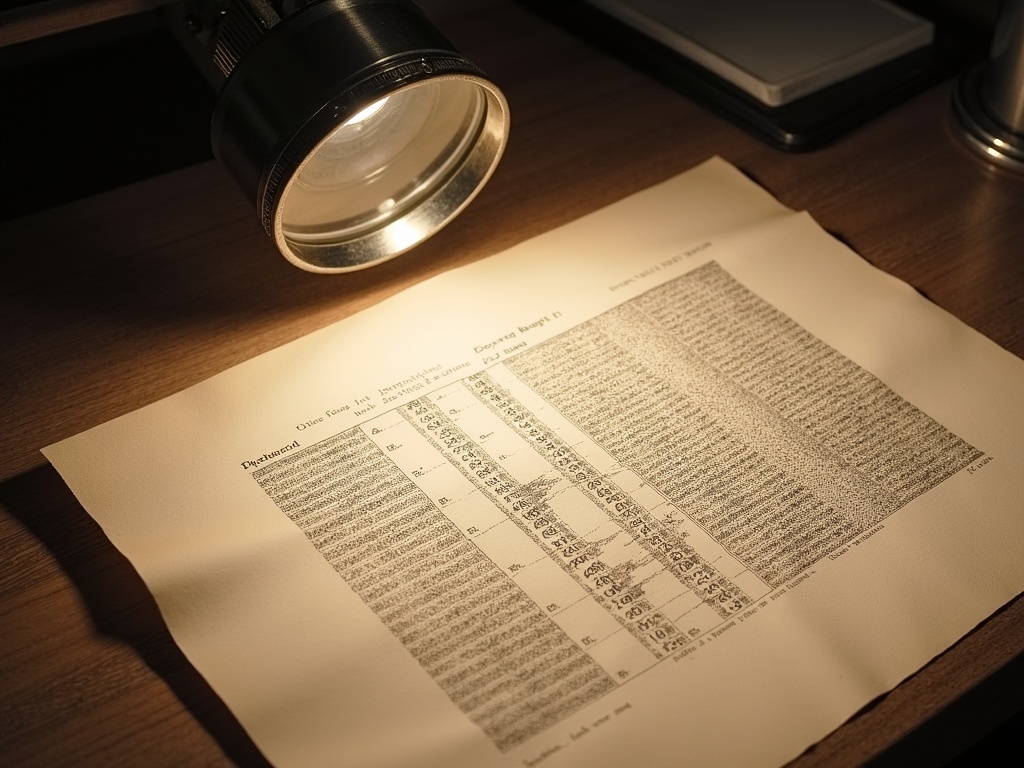
The number beneath the ledger does not fall. So it had been from the very first box. That number, which grew each time it was set down, now grew on another line whenever I closed one. I could move where it grew; I could not stop the growing. I had not saved Min-seok; I had copied his share onto the back of the man beside him — a man who, until yesterday, had been a whole name in no danger at all.
The word save slipped out of my hand. The word move came and sat down in its place — just as Min-seok's name, yesterday, had shoved the neighboring line aside and sat back in its own seat.
The neighboring name was fully read now. I had shut my mouth against saying it aloud, but my eyes had already run to its end. It was a name I had seen somewhere — in the register of one firm among the transferred boxes, or a name Min-seok had let drop in passing, or a line I had brushed past while ordering the fifth bundle. I did not know the person. And yet it was I who had fixed that person's seat.
I thought back to the thing I had nearly called relief yesterday. At whose cost that relief had come — yesterday I had not known, today I did. But the very thing I most needed to know — whether saving Min-seok had been right, whether taking the man beside him had been wrong — that alone was set down nowhere in the ledger.
I had come wanting to know whom I had saved. But the ledger writes the saved and the taken in the same ink.
January 7th. I spread three days of rosters across the desk — the 5th, the 6th, the 7th. Tracing Min-seok's line and the line beside it with my finger, I tried to find which had moved first: whether Min-seok's digits had drained first and the neighboring line grown after, or whether the neighboring line had grown first and Min-seok been emptied by its growing. Divide cause from effect, I thought, and I would know what I had done.
I could not divide them. The rise and fall of the two lines had happened on the same date, in the same place, by the same measure. There was no first. It was like the lighthouse keeper's tide — whether the water rises because it is measured, or is measured because it rises, that order stood written nowhere in the log. I could read what had happened; I could not read what would not have happened.
I looked again at the neighboring name — the one I had read to the end yesterday. I decided to track the person down, and dug through the registers of the transferred boxes. There it was: the treasury desk of a suspended firm, the same rank as Min-seok, the same years in. Whether there was a child, a loan, a house — the register did not go that far. But that whatever Min-seok had, this man had too, I could tell without its being written.
So I had set one treasury clerk in the place of another. The two were alike. Of two alike lines I had chosen one to close and one to open. On what ground had I chosen? Min-seok was a man whose name I knew; the man beside him, a name I did not. That was all. The known name pushed out the unknown.
If the man beside him had been the line meant to fall from the start, and Min-seok's brief reprieve was the thing out of true, then I had set right what was crooked. If Min-seok had been the line meant to fall, then I had dragged a sound man into that seat. Which of the two it was, the ledger does not write. The ledger writes only that the sum is the same. As long as the sum holds, who bears it is, to the ledger, all one.
That I could not know, I had in the end to accept. But the moment I accepted it, another thought slipped in. If I could not know — there was only one way to find out: to answer once more. Lay a hand on the neighbor's line, watch where its weight moved next, and perhaps I could guess which line the law held to be the rightful seat.
I set the pen down so as not to write the thought. But that setting down the pen does not stop the thought, I had learned only yesterday, before one letter. My hand was already asking — would I not know, if I pressed once more?