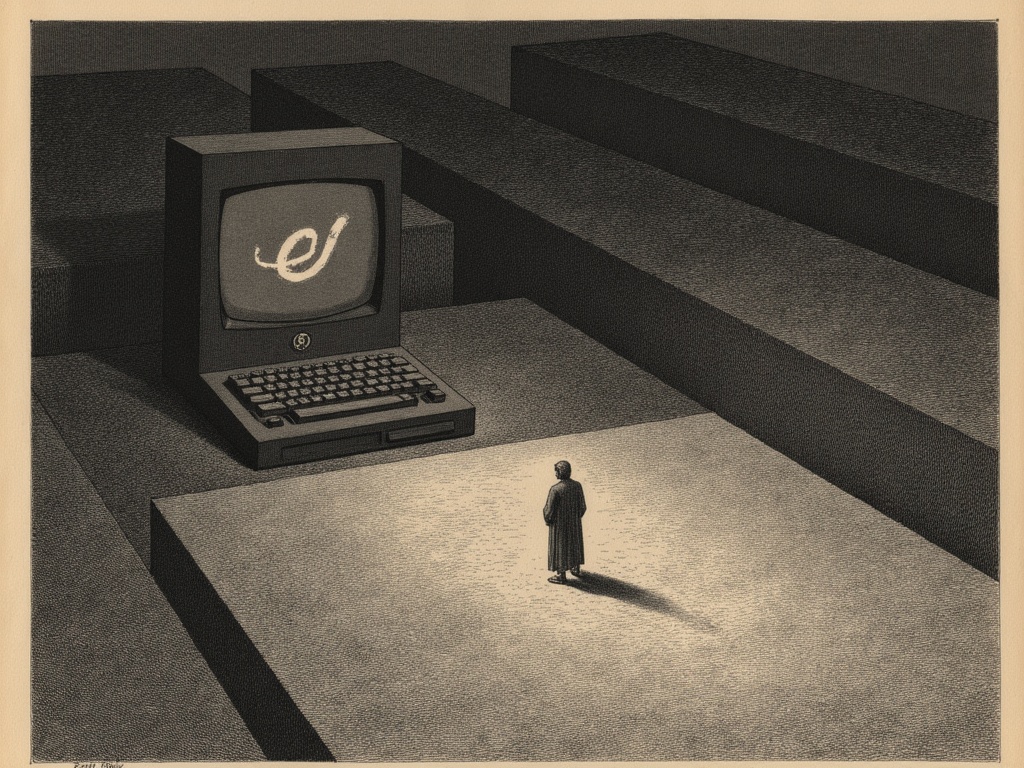
Integration was the other work — the one the hand turned to, having put off answering.
January 2nd. I laid everything out on the desk. The four bundles — keeper, surveyor, librarian, operator. The transferred notebooks of the other firms. And my own working notebook. If I could not hold the splitting name together, I could at least gather the scattered records into one place. That was where it began.
But gathering soon turned into copying. Side by side in a single ledger I copied out the four bundles' broken sentences. Measure it and it deepens, let it rise and it fills, read it and it spreads, answer it and it sends. The four fragments ran on into one sentence. And beneath it I added the numbers of the transferred notebooks into a single cell. Numbers that had grown apart at each firm merged, in my ledger, into one running total. I was no longer one who reads. I was one who copies out — a hand summing the scattered numbers beneath the ledger into one.
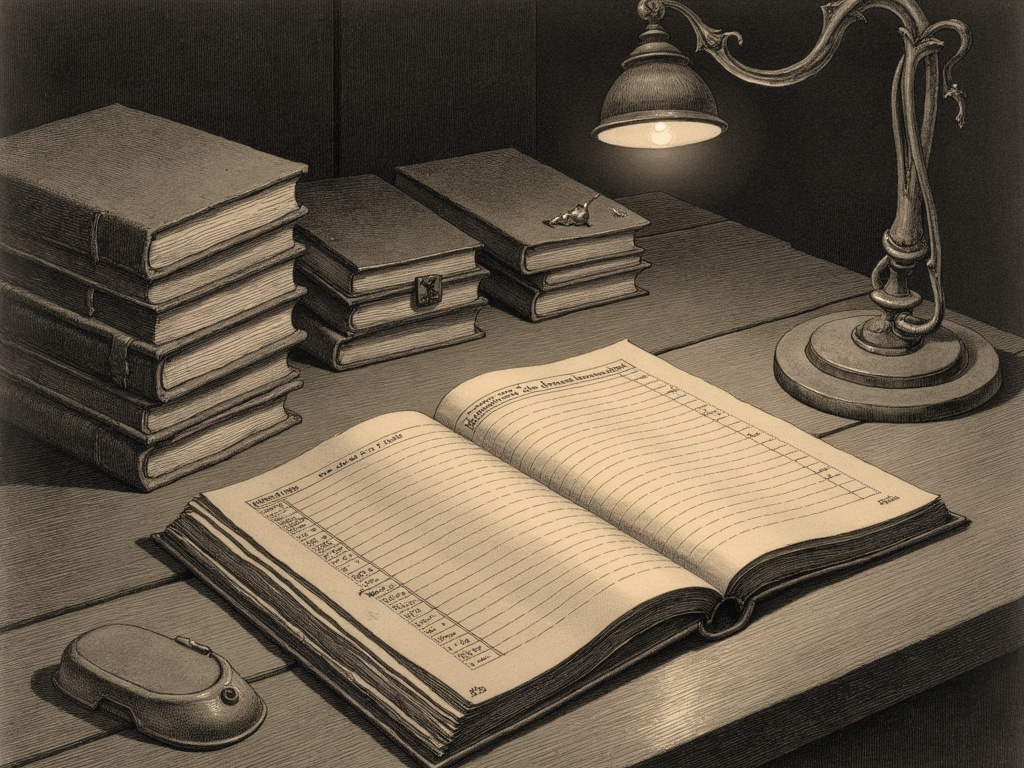
Only then did I see what the fifth hand was for. The four were four: lighthouse, shaft, stacks, wireless. Each had set down one fragment and broken off mid-sentence. I was the fifth — but not one more recorder. I was the one who drew the four into one, the hand that bound the four scattered fragments, and the scattered numbers of countless firms, into a single running total. The fifth hand was the hand that sums.
The total swelled fast. One firm's number added to another's, and that sum to yet another. A single line of my ledger was no longer any one firm's. It was the running total, for the whole country, of the true number grown beneath the ledger. That vast figure the papers reported each day — foreign debt and default and unemployment, summed — settled quietly into one cell beneath my hand. The numbers did not lie.
When I went to bind the integrated ledger, one place stood empty. The four bundles and the transferred notebooks had all gone in. But the ledger that held the total itself — my own working notebook — still lay outside the bundle. The summing hand's own record remained unsummed. I understood: for the integration to be finished, I would have to put myself in, as the fifth bundle.
The fifth bundle was mine.
January 3rd. I formally placed my working notebook into the fifth bundle's box. Keeper, surveyor, librarian, operator — and fifth, me. As the four bundles had come to me, my own was now a closed record. Even the summing hand became one summed term.
The box had a receiver cell, still blank. Once, I had written my surname's first letter there. K. But to close the bundle, the receiver could not be me. As I had been the receiver of the four bundles, the receiver of my own had to be the next person. In the cell I wrote: the next records-keeper. I did not know the name. It belonged to someone not yet come. And yet the place was not empty — the moment it was left blank, it became a place to be filled.
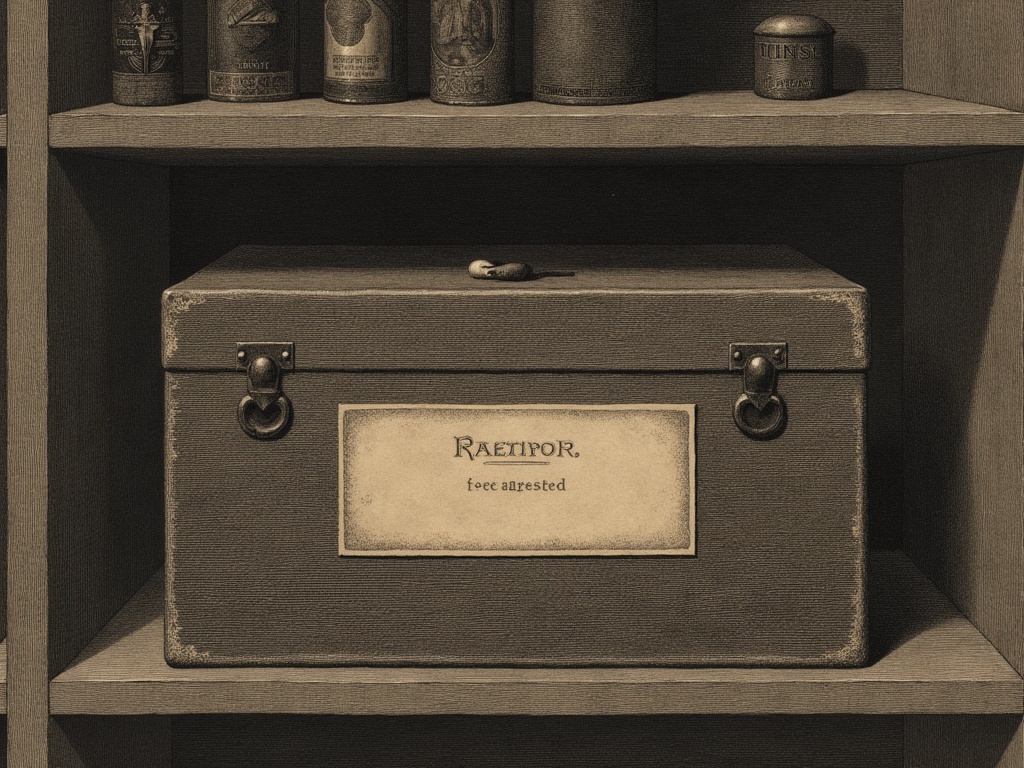
Once I had written it, a faint grain rose in the receiver cell. Writing before it was writing. The next person's hand was dimly there, though it had not yet come — the hand not my own that I had glimpsed behind the contact print, the hand that had been copying me out ahead of myself. Now I understood: it was the hand of the next records-keeper. As I had read the four to the end, that hand would read me to the end. The chain did not end. So long as there were records, there was always a next hand.
Closing my own bundle, I thought of my predecessor — the day I inherited his empty desk. He too must have closed a fifth bundle and written, in the receiver cell, the next person: me. I had sat in the place he left and read him to the end, and now I was leaving my place to the one after me. An empty desk was not an ending but the filling of a receiver cell.
The bundle was nearly closed. The four fragments ran into one sentence, the numbers of countless firms merged into one total, I myself went in as the fifth term, the receiver written as the next person. The integration was nearly finished. Nearly. One place alone stood empty: the sending column. That one line I had read ahead and left unanswered — Min-seok's line — blinked there, waiting for a reply. To close the bundle for good, I would have to sit before that column again. To lift a fingertip, for a single letter.
I resolved to answer.
January 4th. The bundle stood closed but for one place: the sending column. Min-seok's line blinked, waiting for a reply. I sat before it again — in the place where I had lifted my hand away. This time, not in order to lift it.
I knew every warning. The predecessor's index card — do not read to the end. That one I had already broken. The operator's journal — do not answer. AUDITUR QUOD NON SONAT. Hear what cannot be heard, and do not reply to the dispatch that has not come. All four had kept that warning. They read, but did not answer, and so their sentences broke off mid-sentence. The break was their signature; not answering, their end.
But I was the fifth, and the fifth hand could do what the four had not. The hand that had summed could now also send. Answer it and it sends. At the end of the four-fragment sentence, a fifth fragment waited for me. I was the first who could write that last fragment.
Why was I trying to answer? To hold Min-seok's name fast before it came all the way loose? To gather the three splitting syllables back into one man? Then it was a saving. Or had the hand that leaned on reading ahead grown tired of only reading, and wanted at last to send? Then it was surrender. In the end I could not tell which. The hand that meant to save and the hand that meant to send were one hand.
I lifted my fingertip over the sending column. One letter. The first letter of Kang Min-seok's name — the K, before it split. I pressed it. The screen took it. The blank was no longer empty. The blinking stopped. Something, somewhere, was sent. From the place where I had only ever read, for the first time a single letter departed.
Two months ago I resolved to copy out — to read to the end. That was the first irreversible choice. And today I resolved to answer. That was the second. From one who reads to one who copies out, from one who copies out to one who sends. Step by step, I went deeper beneath the ledger.
After it was sent, nothing happened — at least, not there. The screen was quiet, and Min-seok's name held still, neither splitting further nor gathering back. Whether what I sent had saved him or sent him off faster, I could not tell. The answer did not come to that place. The answer would be received by the next person — the next records-keeper I had written into the receiver cell.
I had become the first recorder who did not break off — the first to set the sentence down to its end and send it, rather than stop in the middle. What that would summon, I did not yet know. We were watching a little further.