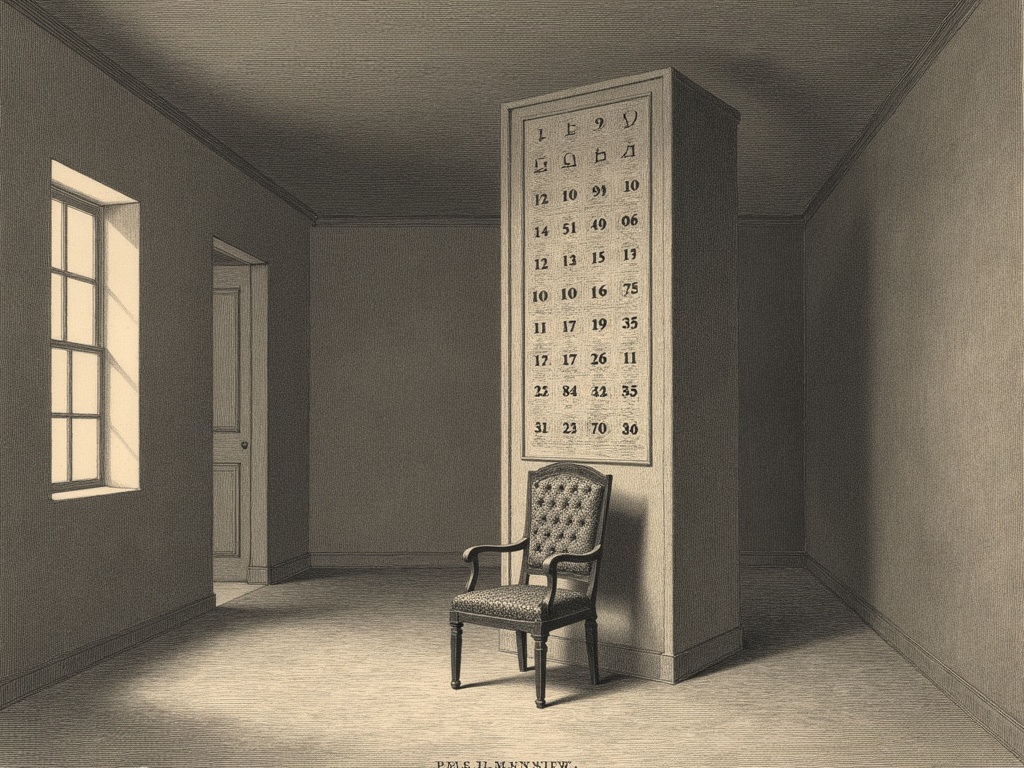
February 25. Eight in the morning. I sat down at my desk.
Four lines stood in the body. The fourth had been written overnight, its last two digits one unit below the third's. The vertical line had come down another unit. The units left before Kang Min-seok's number were one fewer than yesterday — now a number I could count on two fingers.
For the last four days I had gotten by holding my hand at the edge of the desk. Keep the hand away from the sending column and the lines in the body never became results; a seat that never became a result never reached Min-seok. But even as it failed to reach him, the vertical line came down one line a day. Stillness kept a line from becoming a result — it could not keep the line from descending. Even as I held still, his circle closed a seat a day, and the arithmetic held exactly as it had yesterday: once the circle was fully closed, the vertical line would reach him.
If stillness could not slow the count, only one thing could. I had to move a line of the body into the sending column myself. The moved line became a result where it stood and closed, and by that much the vertical line drew one unit further from Min-seok. Close a line now, and his seat won another day.
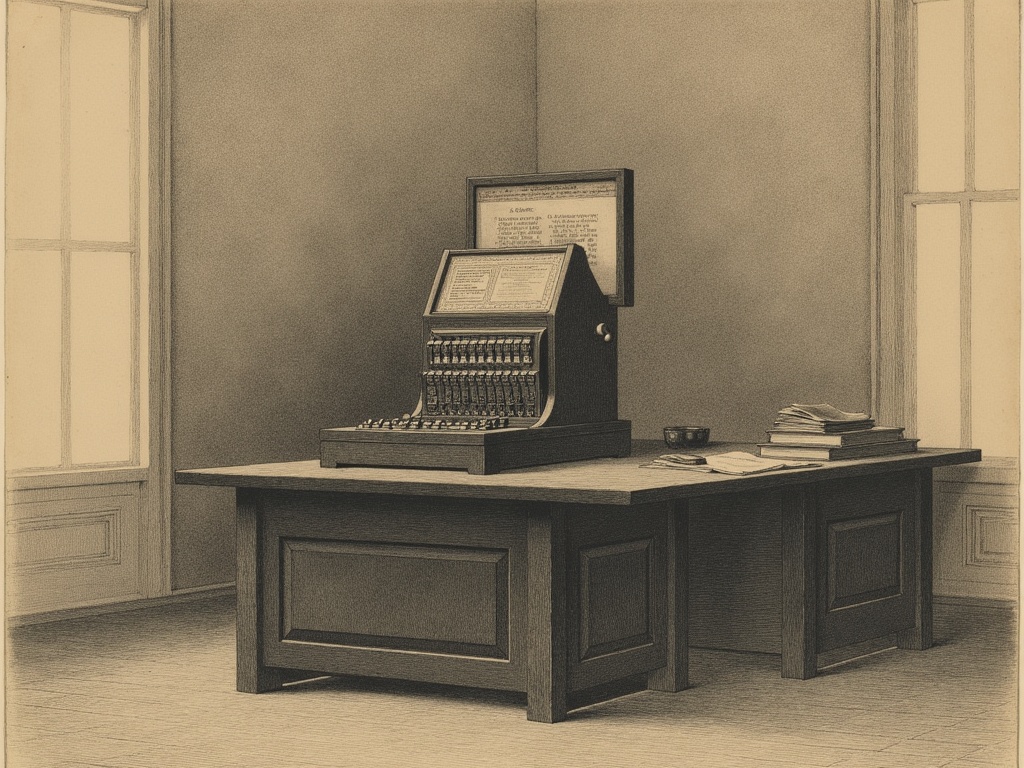
Which line to move was mine to choose. Of the four lines in the body, the first had last two digits that matched my own number; the second, third, and fourth were Treasury. The three Treasury lines all sat close to Min-seok. To move one of them was to close his circle with my own hand. Only the first — the one whose last two digits matched mine — lay far from him.
The first line's number was the one the body had written first, at dawn, its last two digits the same as mine. A seat that had gone four days unmoved into the sending column, and so unclosed. A person I knew by number alone — no name, no face. A person who had lived four days on the stillness of my hand.
Move that person, and Min-seok won a day.
For four days I had let that unknown number rest on my stillness without calling it saving. To call it saving I would have had to know the person's face, and I did not. Keeping a faceless stranger alive was no different from keeping my hand still. But moving that number to save Min-seok was another thing. Closing one person I did not know to save one I did held an arithmetic in it — that the two did not weigh the same. That the hand knew the weights were unequal was the hardest thing to bear before it lifted.
I lifted my hand from the edge of the desk. For the first time in four days I lifted it and knew that I was lifting it. On the days before, the hand would drift a knuckle nearer without my knowing when; today, as it crossed to the sending column, I watched it knuckle by knuckle. Where the result had always run ahead of the hand, today alone the hand ran first. I chose, and I moved.
I wrote the first line's number into the sending column. My hand moved in the grain it always used to copy a number — the single breath at the firm code, the press at the rank slot, the tight gap of the last two digits. The same hand that copied into a memo pad copied today into the sending column, and to the hand's grain the distance between the two was not a knuckle. The same hand, the same grain: written one place it was a record, written the other it was a result.
The instant I wrote it, the first line vanished from the body. The three that remained rose a notch each, and at the empty seat at the bottom a new line began to write itself. The vertical line drew one unit off again. The units left before Min-seok grew by one. I had bought a day.
A day was one seat. The price of a day for Min-seok was another person's seat, and nowhere did that sum come down. However many days I put off his seat, as many other seats closed as the days I put off. Postponing changed the name on the seat that closed, not the number of seats.
Nine a.m. A notice went up from Personnel. One seat cut from the firm's headcount, dated February 25. The number was the first line's. A person I had known by number alone, last two digits the same as mine. The seat I had written into the sending column closed, there where it stood.
I looked back at the sending column to see whether the closed seat could be undone. The number I had written stood there still. I pressed a key to erase it, and it would not erase. As on the day last winter when I first edited a line of a roster, what was written stayed written, and to erase was itself to write. A number once set in the sending column remained as the record that I had closed that seat.
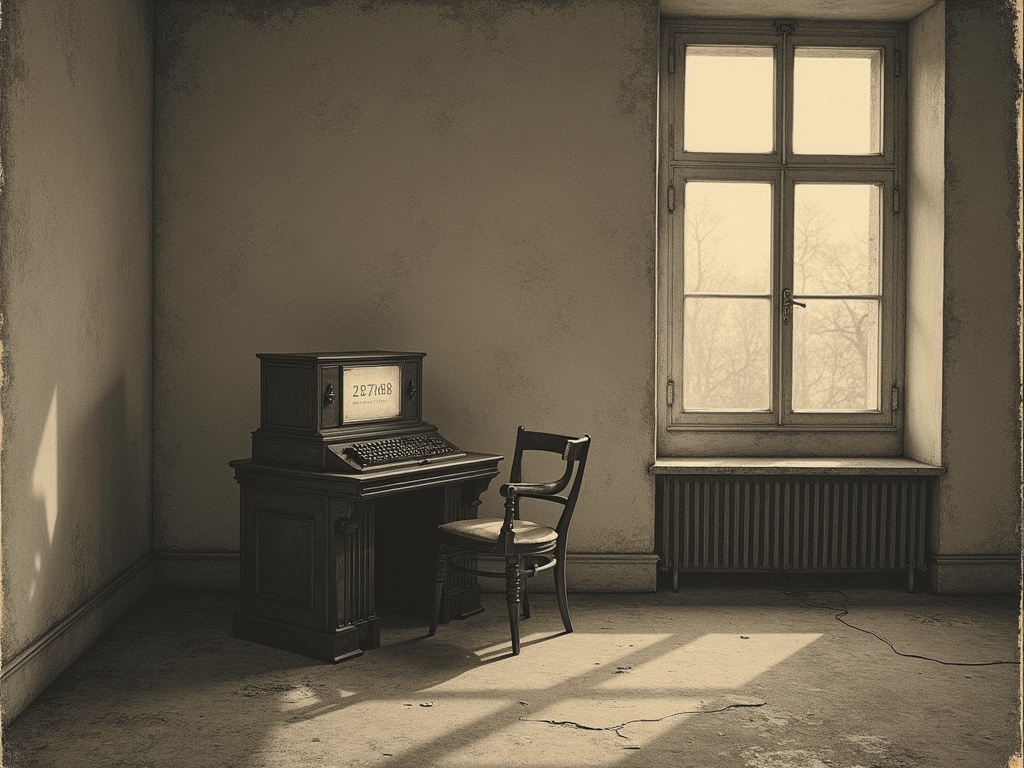
For four days that person had lived on the stillness of my hand. Today that person closed on its motion. That stillness saves and motion closes I had known until yesterday; today I did it. If choosing without knowing was the work up to yesterday, today I chose knowing. What set the hand that chose knowing apart from the hand that chose blind was this — I could put my name to the seat it closed.
In the morning I went up to Treasury. Min-seok was in his place. Today nothing closed around him. The space beside him, which had emptied a seat a day, stood unchanged. He raised a hand when he saw me and said their section hadn't lost a single person today. For the first time in days a faint relief was in his voice. Whose seat that relief had been bought with, he did not know, and I did.
Beside Min-seok's desk, the empty chair where a coat had hung until yesterday stood empty still. The seat that had closed two days back had closed while I held still; the one that closed today had closed because I moved. They were the same empty seat, yet one bore no name of mine and the other did. Min-seok looked at the two with the same eyes; I looked with different ones.
Back at my seat I looked at the body. The new line at the bottom was already filling itself in — not overnight this time but through the day. To have bought a day meant I would have to move another line tomorrow. As I had moved the first line today to win a day, tomorrow I would have to choose and move another for Min-seok to win one more.
I looked ahead to the line I would move tomorrow. The lines in the body were all Treasury now, and every Treasury line sat close to Min-seok. The unknown number whose last two digits matched mine had closed today, and no line far from Min-seok was left in the body. To give him a day tomorrow, I would have to move a line of his own circle with my own hand. Today was the last time I could buy him with a seat whose face I did not know.
Between closing the seats around him to save him and leaving them open so the vertical line reached him, the seats my hand could choose were shrinking by one a day. The far seats ended today. From tomorrow every seat I could choose wore a near face, and at the end of their closing stood Min-seok's.