My predecessor's last can of film was still in the records-room safe, just as he'd left it — never wound to its end. I did not open it.
First I had to know what made the numbers grow. To open that can without knowing would be like going down a mine shaft without knowing its depth — and I had not yet, at that point, read the surveyor's log.
I decided to go about it like a scholar: hold every variable but one.
From the old settled ledgers I picked three balances — unrelated accounts, dead numbers that would never be written again. I called them A, B, and C.
A: I copied onto an index card and also shot on film. Then I locked card and film in the safe, and resolved to look at that one leaf of the ledger once a day.
B: I only copied onto an index card. I did not shoot it.
C: I neither copied nor shot. That its balance existed at all I noted on a separate sheet — a sheet only I would see, to be burned when the experiment was done. The ledger itself I did not touch.
Three days I left them so.
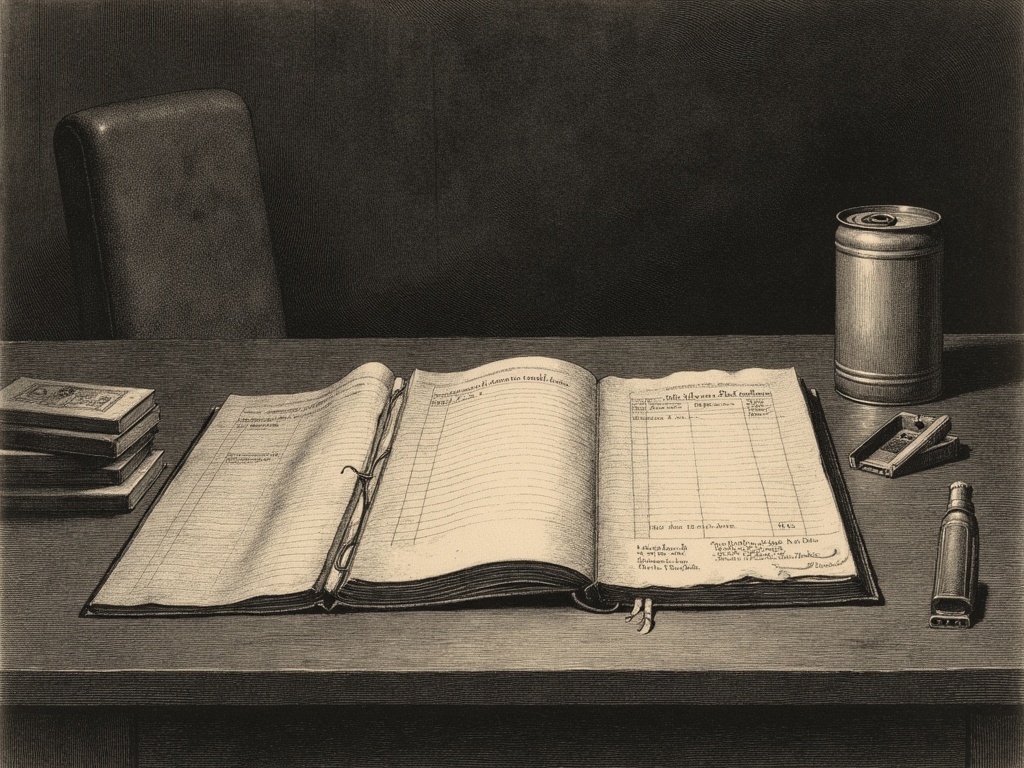
On the morning of the third day, I opened the three leaves in turn.
A's balance had gained two figures at the end. Copied and shot. B's balance had gained one. Copied only. C's balance was — unchanged. Not a single figure more. Not copied.
The chill at my fingertips was familiar now. That it was familiar made me colder still.
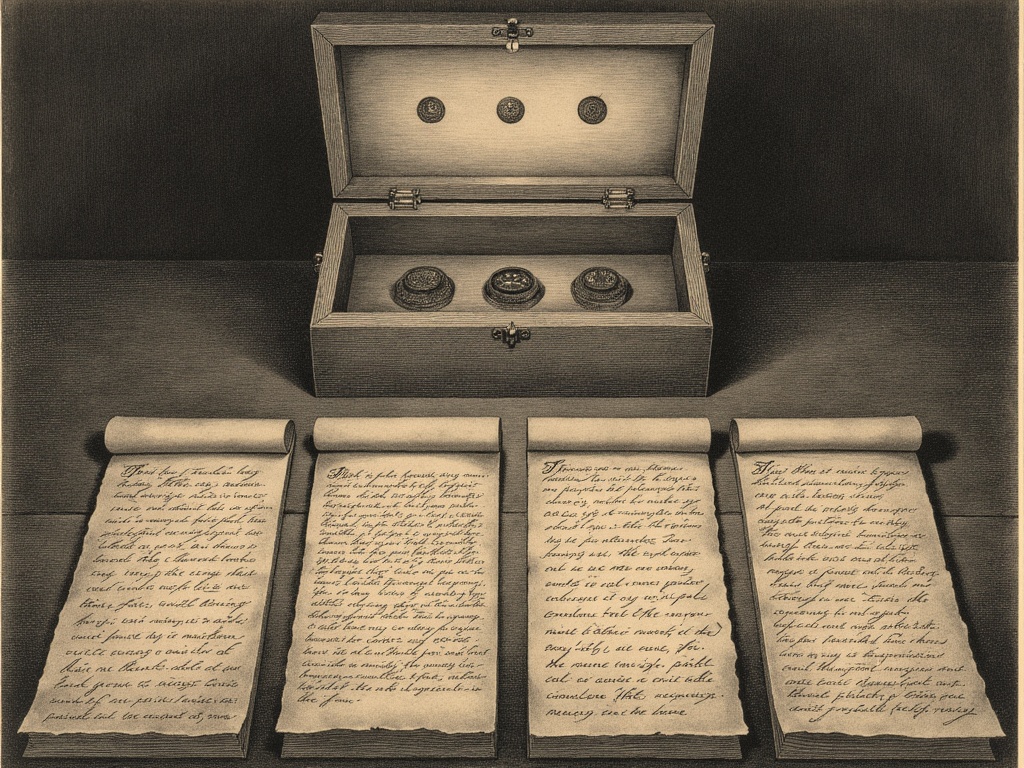
The record makes its object grow. The measuring deepens the depth. I felt as though I had read that sentence somewhere. Not read — I would come to read it. I went to the box from Pnakotic Press. Of the four bundles, I opened the surveyor's log.
He had been a man measuring the depth of a vertical shaft at some coal mine in Gangwon, in 1923. He would tie a red thread to his plumb line every fathom, lower it into the shaft, and count the depth at which the weight touched bottom. I knew my predecessor's charge — not to read his writing to the end. But one line had already caught my eye.
The same shaft, the same line, measured twice in the span of a single meal — and each time the weight touched a bottom a fathom deeper.A fathom deeper each time. His shaft grew deeper though no one was digging it, and only the numbers of the one who recorded the depth grew, year on year. He laid it to a stretched line, to the damp. As I did. And at the last he wrote one line — that a surveyor is not one who measures the depth of a shaft, but one line by which the shaft records, through his own body, how much deeper it has grown.
A shaft seventy years gone and the dead balance on my desk lay under the same law. Measure, and it deepens; record, and it grows. The observing hand feeds its object. The surveyor was swallowed by his shaft, and I — was still, for now, measuring dead numbers.
Dead numbers. On the words I stopped.
My experiment had been run on settled balances — dead numbers no hand would write again, touched only now and then by one man's. And so they had grown slowly: a figure or two in three days.
I set down my pen and looked at the noticeboard on the records-room wall. The week's shooting assignments, sent down from head office, were pinned there. On the first line of next week's work stood a familiar account class.
Not a settled ledger. A living one — our own short-term foreign-currency borrowing register. A number written at every day's close, keyed into every terminal, reported to head office, and reported on again somewhere higher still. If a dead balance touched by one hand every three days grew two figures in three days —
then that number, copied out by hundreds of hands several times a day — how fast was it growing?
To handle a living ledger, I needed a terminal.
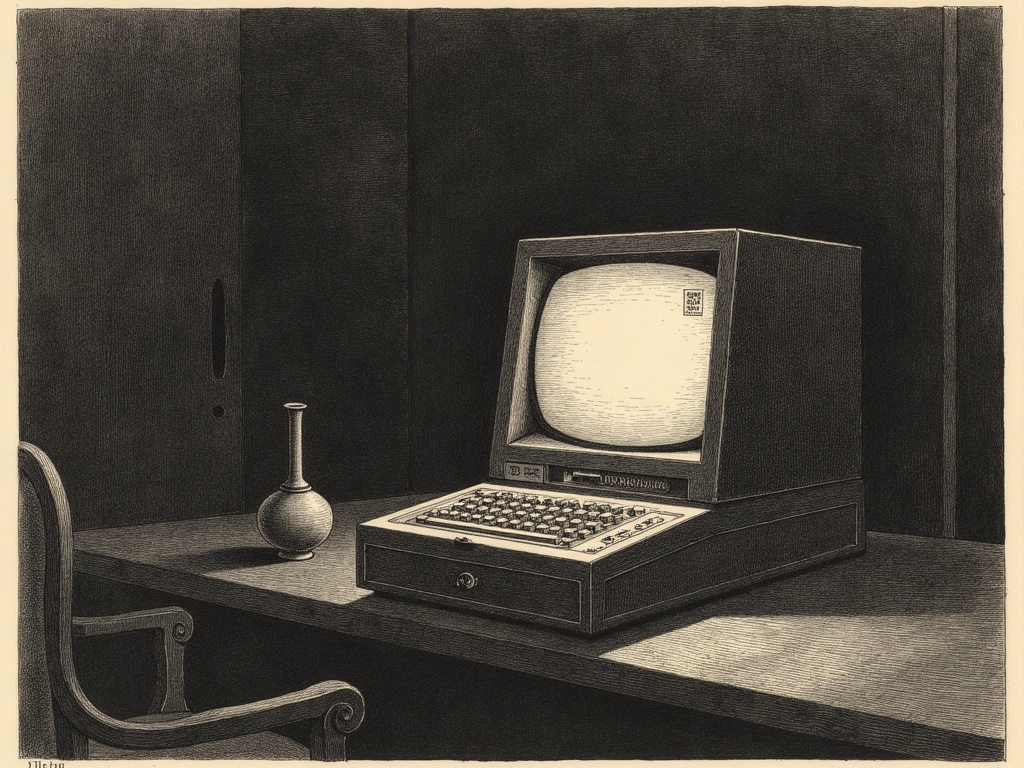
In the records room stood one credit terminal head office had sent down just short of disposal — a discontinued model, foreign-made. I sat before it to pull the file on our short-term foreign borrowing. It was the first time I had turned it on.
When I threw the power, the screen held a beat of darkness, then the maker's boot screen came up — the first light that terminal had thrown after five months shut in the records room. At the center, beneath the maker's seal, a line of Latin surfaced — a company motto no one reads, gone the moment the boot ends.
I know that line. I had never read it, yet I know it.
From the surveyor's log. On the winding gear at that Gangwon mine in 1923 — that German iron frame — a line had been engraved. On the nameplate of the machine that reeled his plumb line. The machine that measured a shaft's depth seventy years ago, and this terminal throwing up foreign balances before me now, wore the same motto.
A line of Latin engraved on the brass mount's nameplate. Five months I did nothing but polish it, and never once read it.The surveyor, too, only polished it for five months and never read it. I, too, left it shut away five months and never switched it on. A machine that measures does not easily let its motto be read. By the time it is read, it is already too late.
In small characters below, the same line's gloss was set — a courtesy the maker had added.
NUMERUS NON MENTITUR — 'Numbers do not lie.'
It must have been made as a comfort. To the one who handles the ledgers: the numbers, at least, will not deceive you. But the surveyor's shaft never lied. Measure by measure, it grew truthfully deeper. Numbers do not lie — only, they do not hold still.Toward what that unlying number grew, the motto did not say. The surveyor's machine did not say either. The maker had added the gloss and left off that one thing alone.
The boot ended. The motto vanished, and the query screen came up. I keyed in the account number for our short-term foreign borrowing. A living number — the one copied out at every close, from every terminal, to head office, to somewhere higher — surfaced on the screen.
It was larger than my predecessor's July card. Larger even than the number the settled ledger had climbed to that morning. The living ledger was fast — as fast as hundreds of hands copying it out each day.
I lifted my pen to copy the number onto an index card. And stopped. Copy, and it grows. I would be adding a figure of my own. I set the pen down and memorized the number on the screen by eye alone.
Just then the date stamp in one corner of the screen caught me. The terminal stamped the query date automatically. Today's date should have stood there — November the 1st.
The date stamped there was November the 2nd.
I doubted the terminal's clock. Five months powered down; the internal clock could have slipped a day. I looked at the records-room wall clock. November the 1st, Friday afternoon. My wristwatch, and the day's report, both said the 1st. Only the terminal's clock had slipped, I told myself.
But the balance the terminal had thrown up was not the closing number of November the 1st. It was the number of November the 2nd — not yet closed. Tomorrow's ledger, already written inside the terminal.