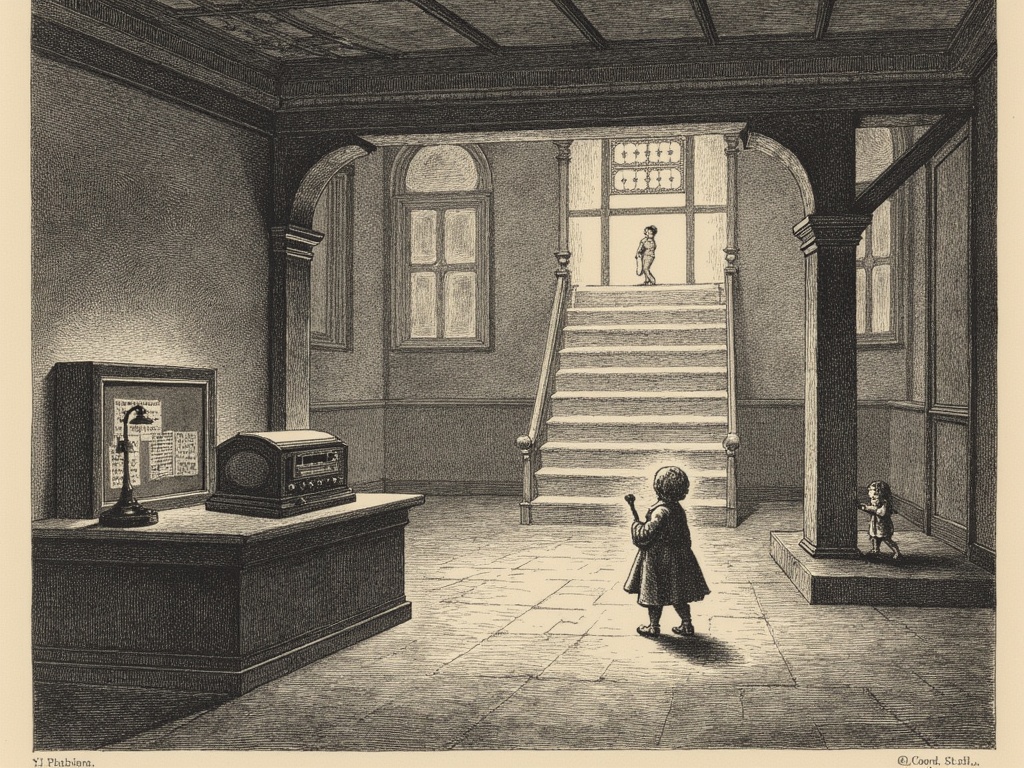
Min-seok was one of my intake — same hiring year, same orientation, and for a while the same table in the canteen.
December 20th. That morning Min-seok came down to my records room. The air up in the funding department must have gotten hard to breathe. He talked the way he always did — the rumor that the firm was going under, the story about not being able to scrape together a single day's money on the call market, the worry over how far the suspensions would reach. And then, as always, he turned to his own household: the baby from last year, the house he'd stretched to buy in the spring, the loan with years still left on it.
I heard him on two levels. On the surface, a colleague's worry. Underneath, the single line I'd read ahead the day before, on the last page of the fifth bundle. Min-seok. Child, loan, house. The household he was describing out loud lay exactly over the ledger entry I'd read the day before — matching it word for word.
A person's household was already a line of ledger. The loan was a liability, the house collateral, the child a dependent, the monthly salary a cash flow. We just don't usually read it that way. But the law had taken that ordinary line, moved it beneath the ledger, and set it growing and wearing down. The next line due to wear away was a living man — and for the first time I saw it spelled out, in a colleague.
We were the same intake, hired the same year, started at the same seat. I had inherited my predecessor's empty desk — he had been copied out, and then he was gone. Looking at Min-seok, I saw one more empty desk before it came: the seat where our intake wears off the line, one person at a time.
Min-seok let a sentence trail off without meaning to. …measure it and it deepens, let it rise and it fills. He had no idea what he'd just said. It was a piece of the four bundles' sentence — one I had only ever copied down, never spoken aloud. The splitting was still spreading through him. He was carrying a line without knowing he carried it.
But the real fear lay elsewhere. The moment I read him as a line, I might already have become the hand copying him out. Measure it and it deepens; read it and it spreads. Could I just look away — refuse to see him as a ledger at all? No. I knew better: there is a price to not writing, too. Someone writes in your place. Looking away wouldn't lift him off the line. Seen or unseen, he was already a page in my bundle.
That afternoon the radio reported another merchant bank suspended. Listening to the date and the name, I realized the order they were failing in followed the lighthouse keeper's tide-table. One cell at a time, at a set interval, in turn. I could already point to which cell would stop next. And somewhere on the line those cells were drawing stood Min-seok's firm.
The suspensions didn't come all at once. They came one cell at a time, at set intervals, in turn.
December 21st. I spread the keeper's tide-table on my desk and laid the roster of merchant banks beside it. Two sheets, written by different hands in different years — and the same rhythm. Just as high and low water returned at set intervals on the tide-table, the banks stopped at set intervals on the roster. Let it rise and it fills; let it ebb and it shows. On the flood, one place went under; on the ebb, one place laid its bed bare.
Each day the radio read out a name or two. Before I heard them, I could already put my finger on the next cell on the tide-table. The spot where a single day's call-market money passed from one line to the next — the firm sitting there was the one the next ebb would strip to the bottom. By the time the radio read the name, my finger was already pressing the cell I'd marked.
This was no prophecy. I wasn't seeing the future — only reading, ahead of everyone else, a line that was already written. The tide was not a forecast but a law. Rise and it must fill; measure and it must deepen. So it was with the suspensions. They were not events bearing down on us but a line that had been growing all along and was only now breaking the surface — the place where the number that had grown beneath the ledger climbs, at last, above it.
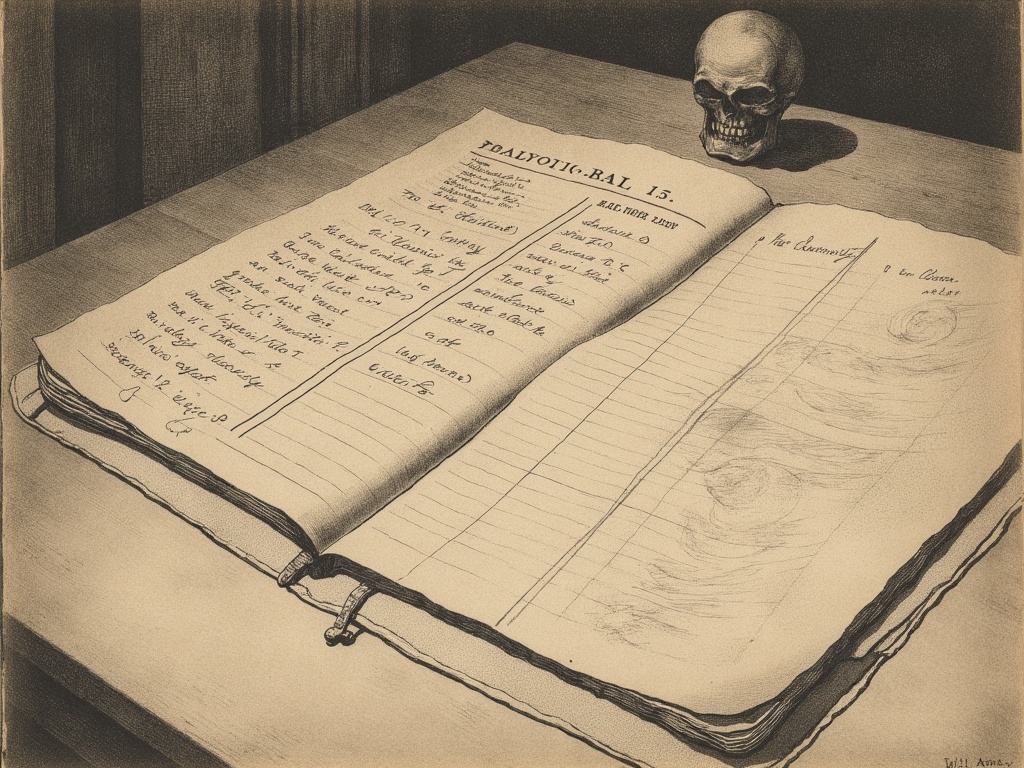
I slid my finger one cell further along the tide-table. The next ebb, and the one after. The cells ran honestly forward, drawing their line. And among the places that line touched, one cell fell on the name of Min-seok's firm. An ebb a few days out. The radio hadn't read the name yet. But the tide-table was already holding the cell open — an empty cell waiting its turn to come in.
When I lifted my finger, the cell stayed where it was. I had read it, and what I'd read would not be unread. Until the next ebb, I would have to go on knowing that one empty cell in advance — with no one I could tell.
There was no end to reading ahead. Once I'd pointed to the next cell, I wanted the one after it, and the one after that.
December 22nd. Every morning I sat down at the terminal. In the black screen between boot-up and log-in my own face showed, and the motto rose — and when the screen woke, there was tomorrow's roster. Not the firms failing today, but the firms that would fail tomorrow. I read it. Before the radio had even read out today's names, I already knew tomorrow's.
At first it was one cell. Then two, then three days' worth, a week's worth. The more I read ahead, the more I wanted to. Not knowing became unbearable. A morning I hadn't read the roster felt like walking through fog; a morning I had read it was — horribly — a relief. If I knew what was coming, at least I didn't stand there shaking. I began to lean on reading ahead.
The operator's journal came back to me. He had been warned not to answer. He heard what could not be heard, and his hand reached for a dispatch that had never come. Now I was close to his seat. Reading ahead was a kind of listening. And once you had listened, the terminal's sending column blinked, empty. Receiver: me. Sending column: blank. As long as you only read, the column stayed empty. But put in even one character — and that was an answer. Between reading ahead and answering lay only the width of a single blank.
I was no longer someone who stumbled on a line in the ledger by chance. I was someone who came every morning, on purpose, to read tomorrow. From a reader to a reader-ahead. And the reader-ahead's fingertip kept catching over the empty sending column. Not yet pressed.
That morning the terminal's roster for tomorrow ran long. Not one or two. It filled the whole screen and kept going below. The tide that had kept its order one cell at a time was about to ebb all at once. The names were about to lay their beds bare in a row. This was no longer a single line but an announcement. Tomorrow's announcement — and I had read it this morning, ahead of time.